

Launching an Elite tier to address value skepticism and increase conversion by 18%.
Timeline
Sep 2025 - Dec 2025
Product
Pumpkin Wellness Club

We designed our wellness plans around the most common preventive care needs, using industry benchmarks and internal modeling to balance savings with typical annual spend. We had always expected to refine the plans over time, but a few months after launch, conversion was trending lower than anticipated.
I started a working group with cross-functional partners, which I dubbed "Operation Tailwag." The goal was to find ways to increase to improve CVR through initiatives focused on targeting, messaging, and product.
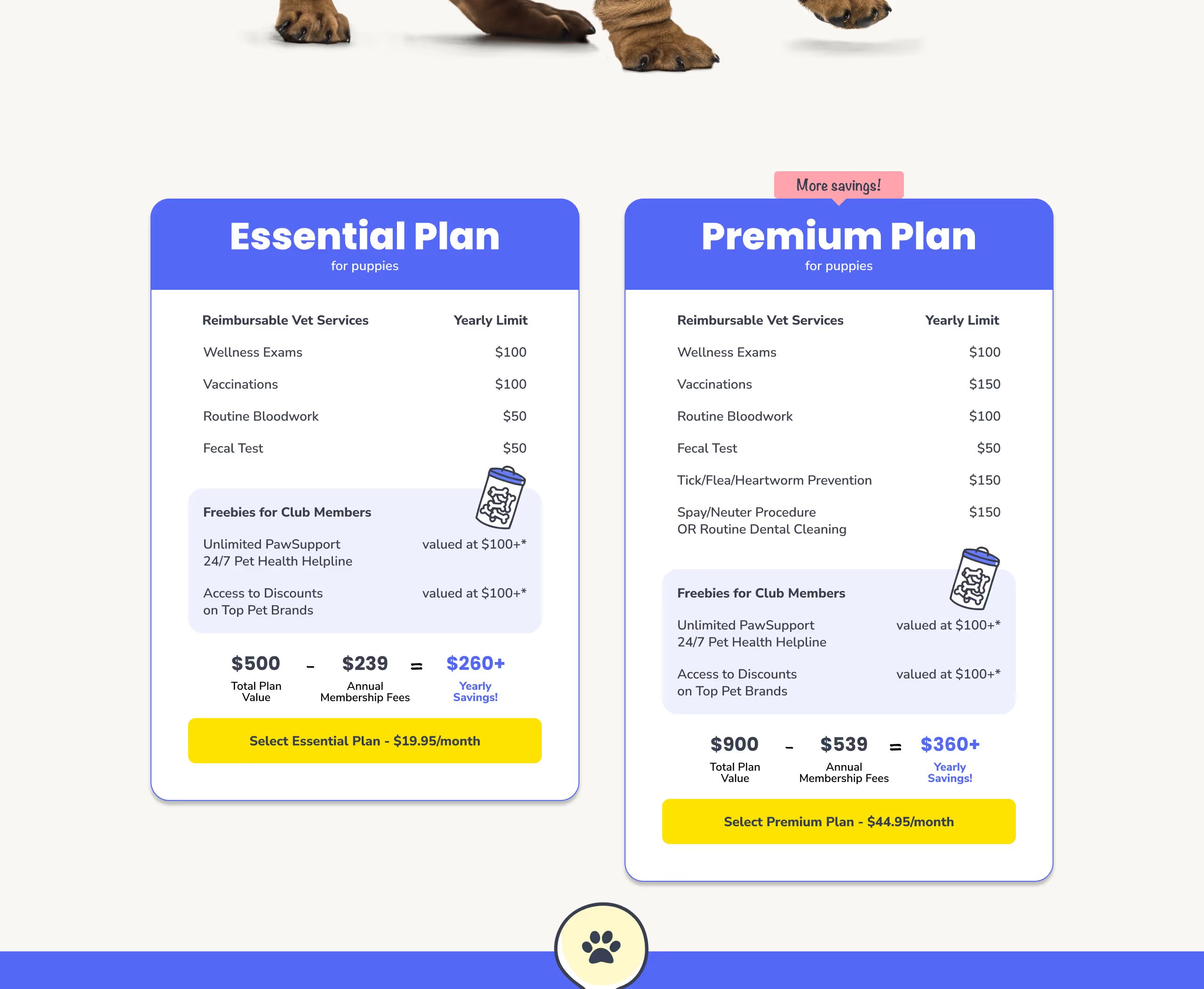
Our plan page at launch. In addition to creating a new plan variant, I would also use this project to improve how product info was displayed within the purchase flow.
In designing these plans, we had assumed savings (even partial) would feel valuable.
However, interviews with leads and customers showed that for high-cost services like dental and spay/neuter, $150 coverage felt meaningless – even when it reduced cost. Another common theme was a desire for grooming services – especially among dog owners.

...but what does "more comprehensive" look like? That is, what changes would actually increase perceived value – and how much more would customers pay for them?
I worked with a subset of the Tailwag group, my partners on the actuary and product team, to translate research insights into 10 potential plans. I designed and ran a choice-based experiment to pressure-test the lineup before launch, ensuring the new three-plan structure would grow the overall pie. The product variant selector test allowed us to assess relative plan appeal and estimate impact on market share and revenue before A/B testing in market.
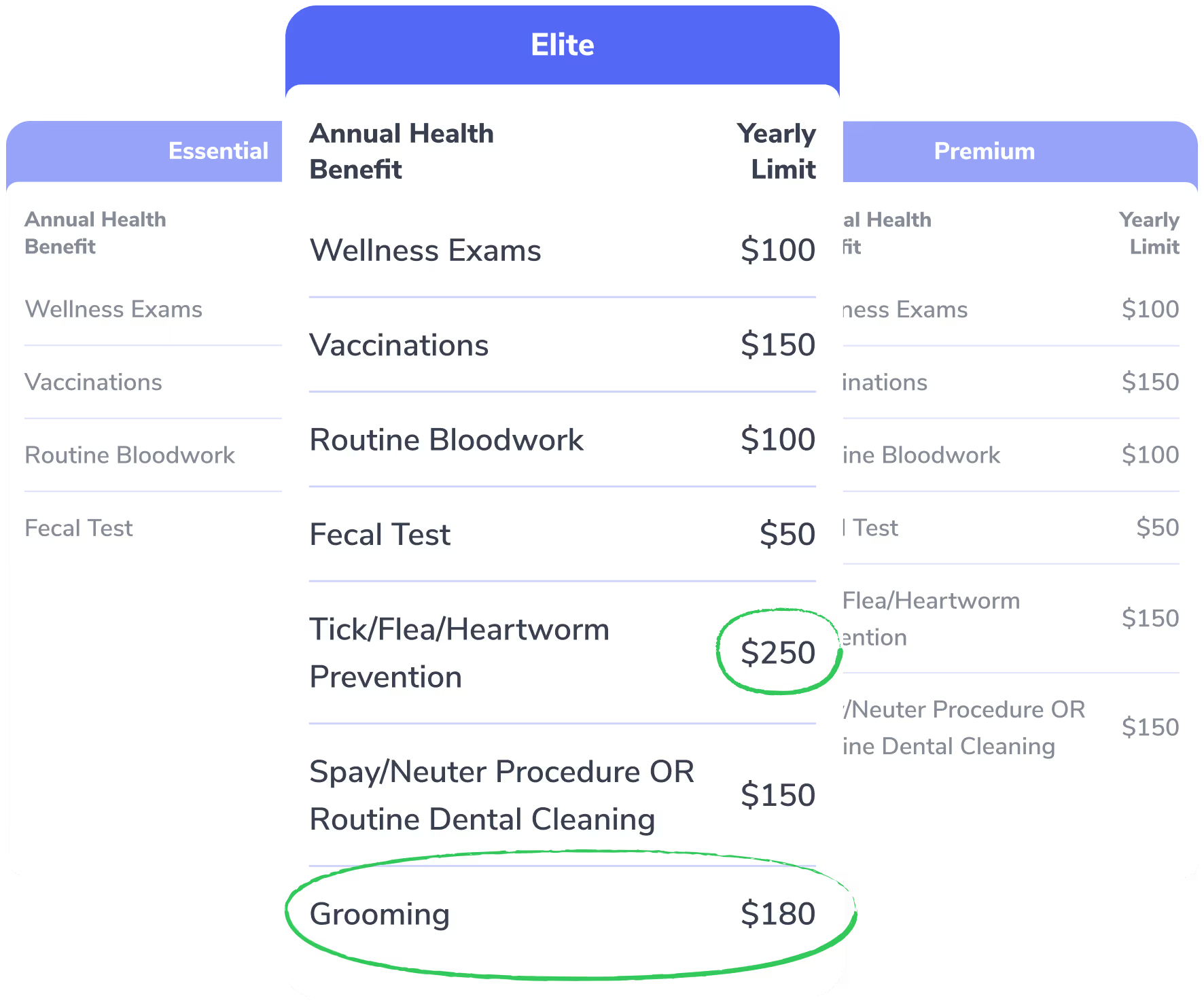
Although customers said during interviews they wanted spay/neuter dental – even if it cost more – when forced to consider the tradeoffs, customers tended to prefer incremental benefit additions. I shared the results with my team, and we used what we learned to create what became our Elite plan. This included $100 in additional coverage towards preventative meds and $180 towards grooming.


When customers were forced to choose between different plan profiles, benefits like enhanced tick & flea prevention and grooming consistently drove preference over a larger spay/neuter/dental cap.
Unlike products with a single defining difference (ex: an iPhone with different storage tiers), our plans vary across many dimensions, with no one feature clearly signaling the “right” choice. Therefore, comparison is an essential step in the shopping process. The UI needed to support comparison while still making the current selection unmistakably clear.
I designed a shared plan-selection interface for both DTC and vet use cases, intentionally reusing patterns already validated through user testing in our white label vet product instead of reinventing the experience for Elite.
.gif)
.gif)
Direction B made it easier for customers to compare plan contents and pricing at a glance, reinforcing Elite’s value relative to the other tiers.

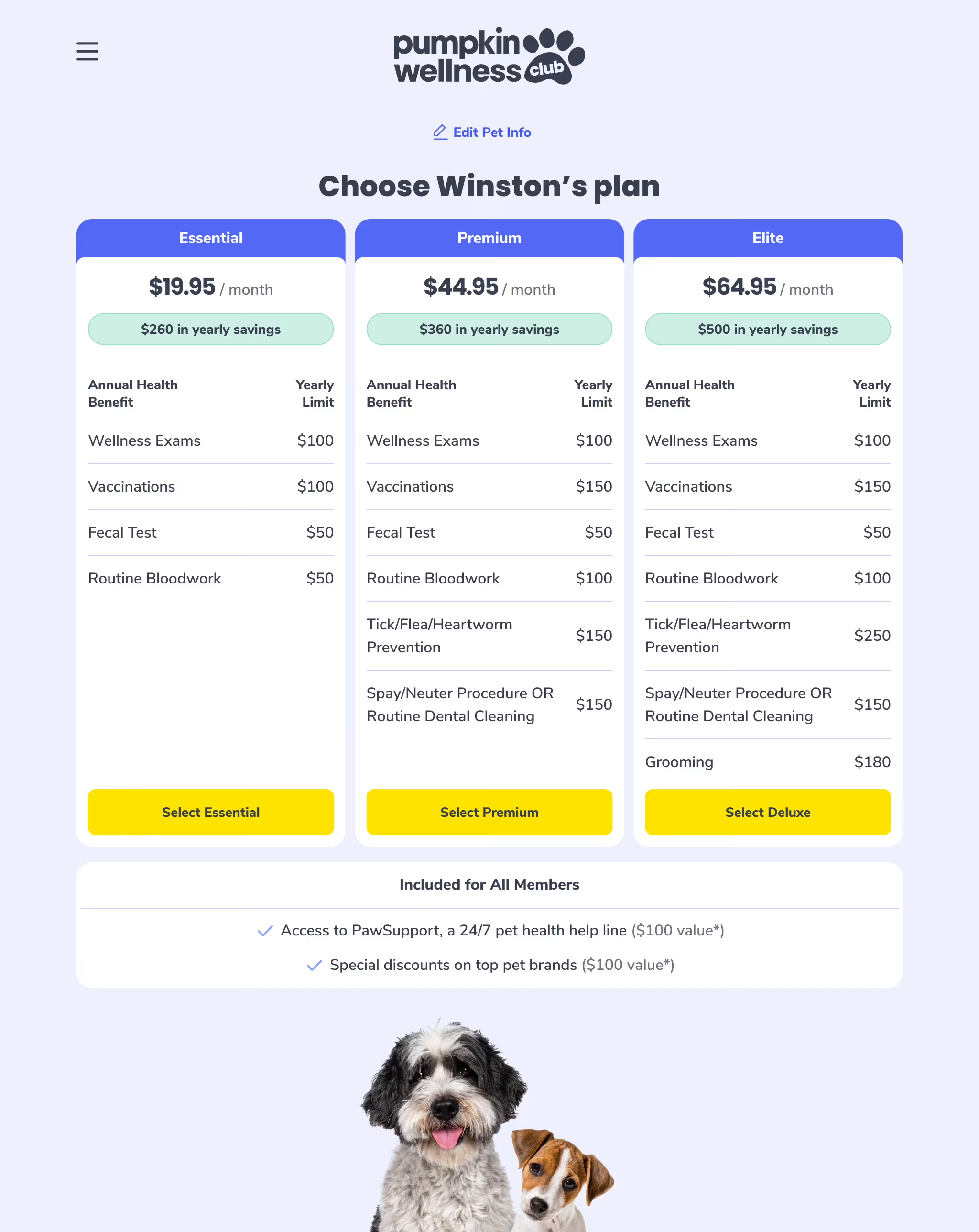
The introduction of Elite resulted in a significant conversion rate lift across all plan tiers.
Notably, this lift was not driven solely by customers selecting Elite. Conversion increased across Essentials and Premium as well, validating our hypothesis that introducing a third tier would act as a value anchor, helping customers better understand plan tradeoffs and commit with greater confidence at every price point.