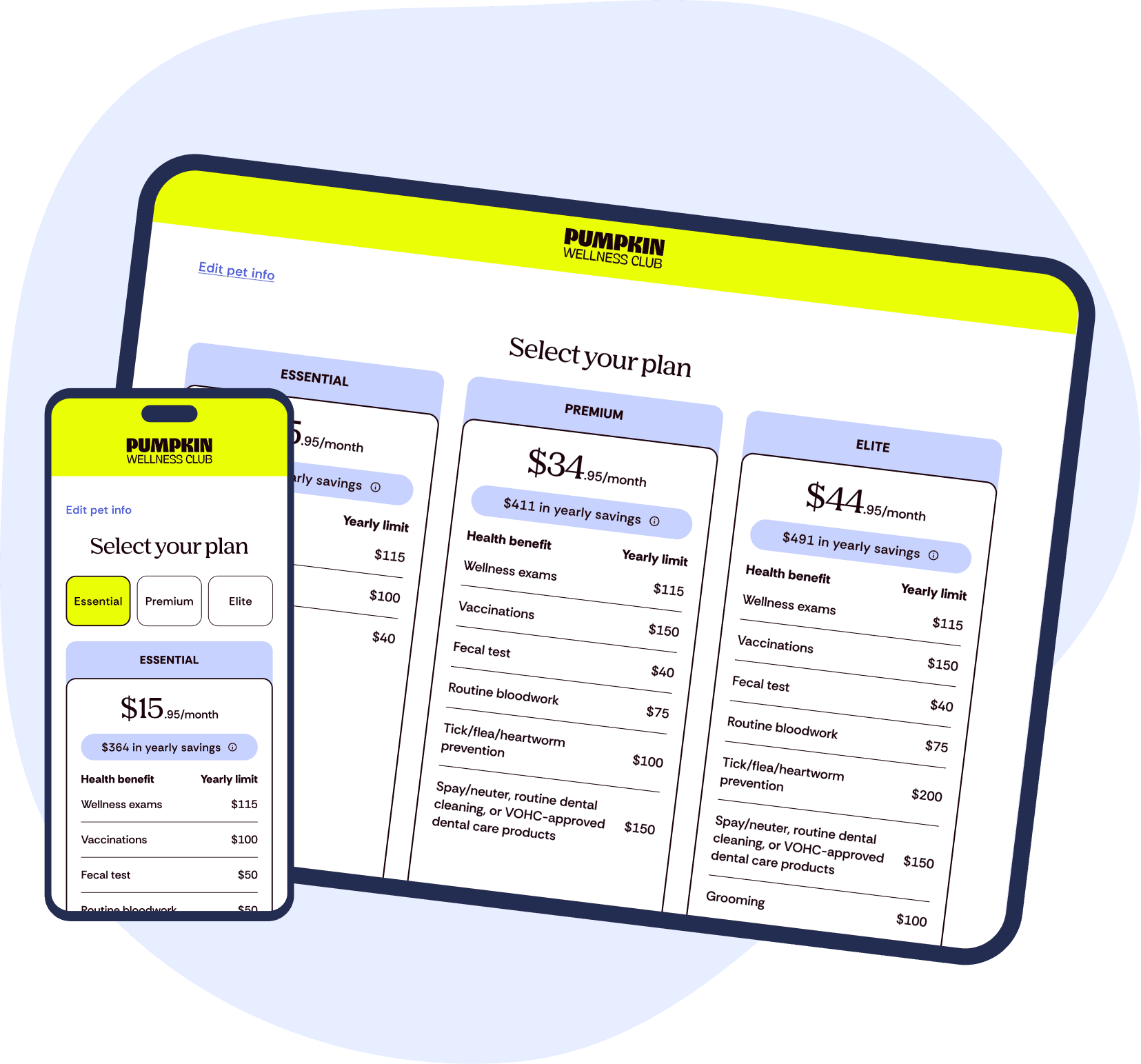
Conversion rate was lower than expected. I needed to figure out why.
I started a working group with cross-functional partners, which I called "Operation Tailwag." The goal was to find ways to increase to improve CVR through initiatives focused on targeting, messaging, and product.

The plan selector at launch. The layout only supported two plans, made side-by-side comparison difficult, and repeated identical information across cards, burying the differences that actually drive a decision.
I heard two things from pet parents: a desire for more value, and a fear of not getting their money's worth.
Customers told me two things that didn't necessarily fit together. They wanted more coverage for expensive services like dental. But they also worried they wouldn't use what was already there. The obvious response – adding more coverage – could actually make the second problem worse.
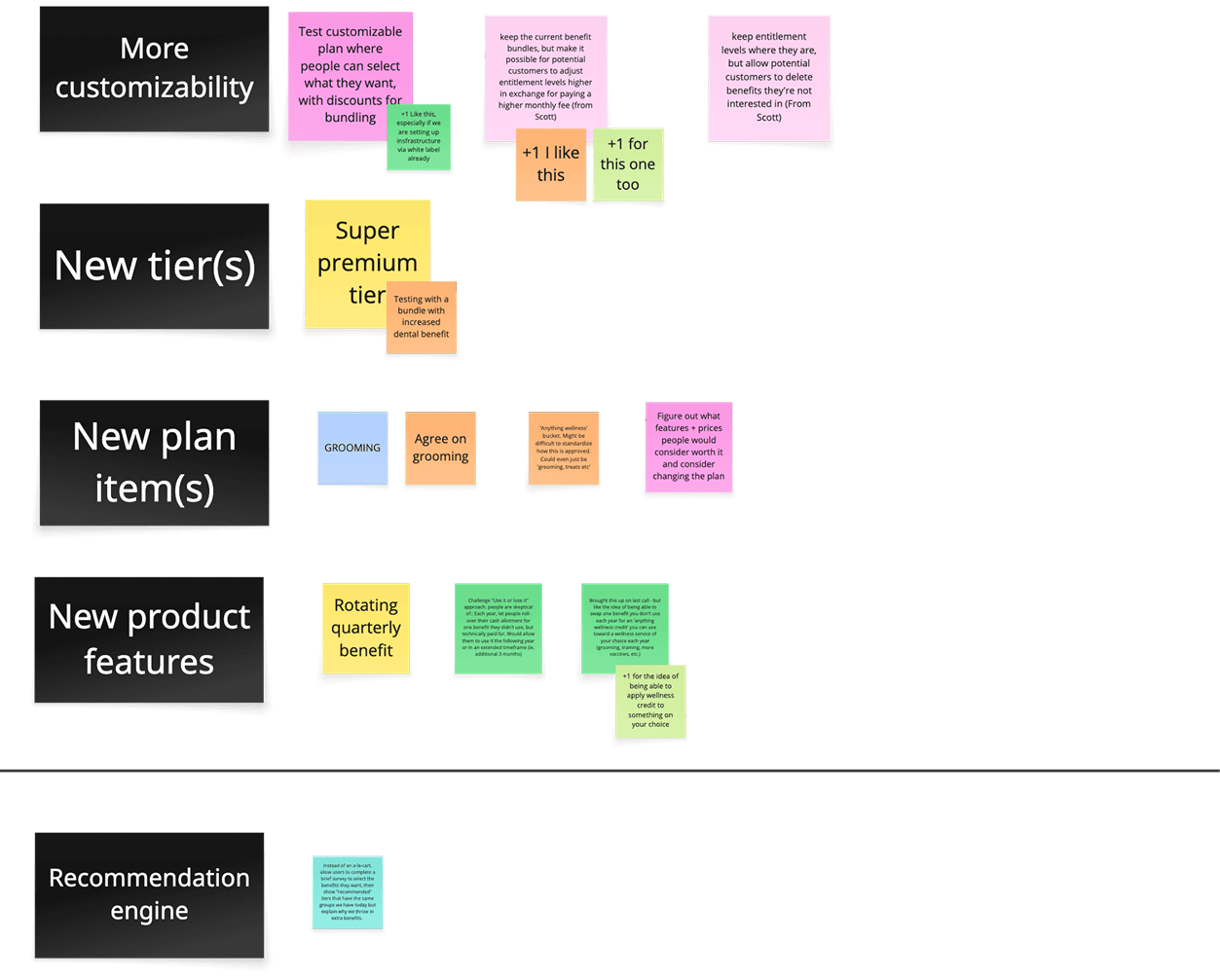
Brainstorming solution directions: how might we provide pet parents with more value in a wellness plan?
I led an ideation session with my partners on the product and actuarial team to determine how we could address this gap.
Exploring the solution space
Customization levers
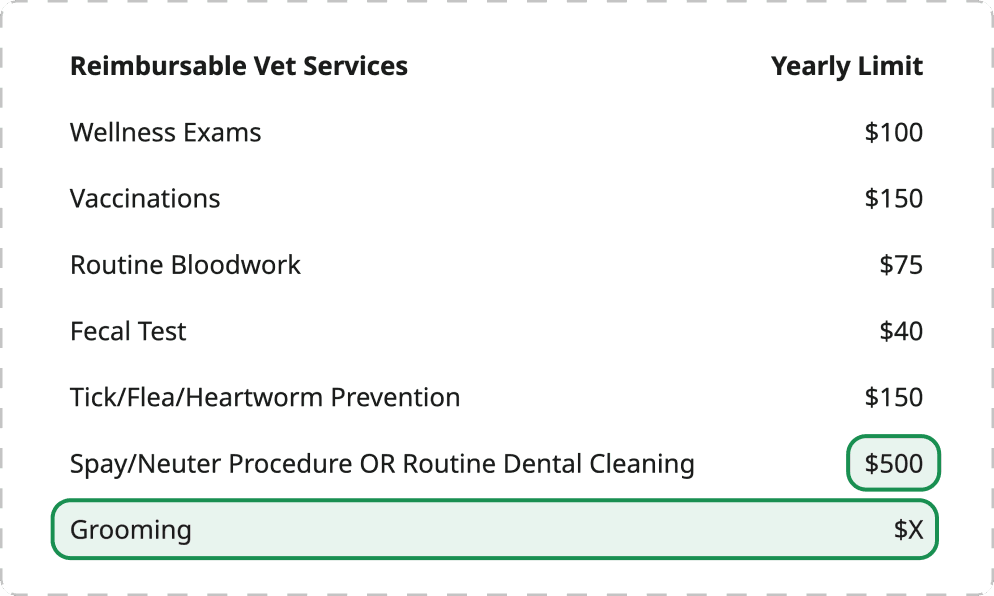
New services/increased caps
Age-based plans
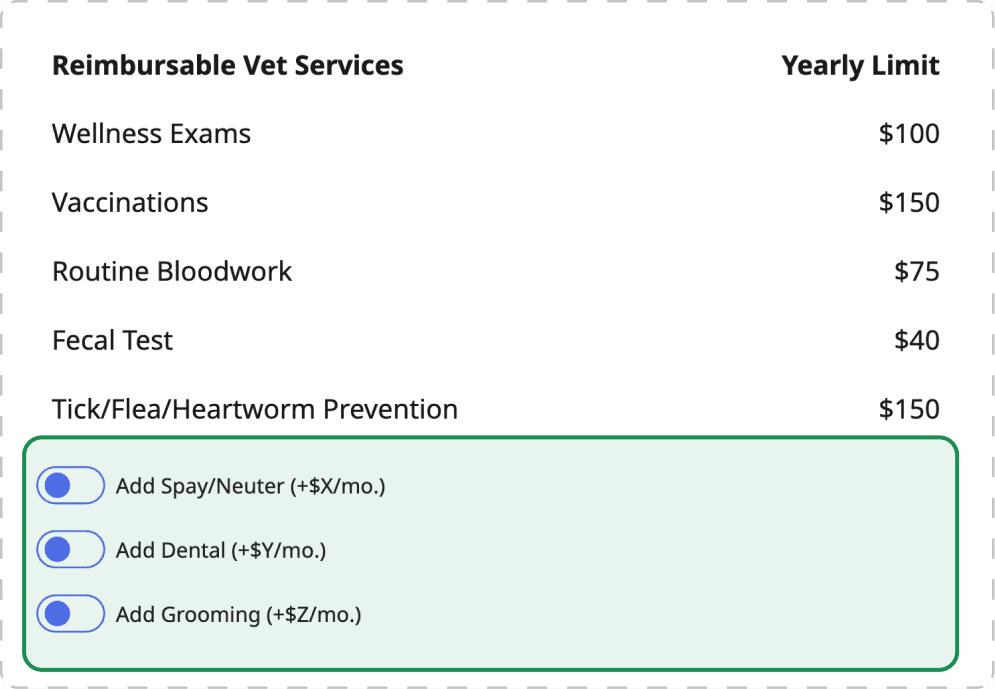
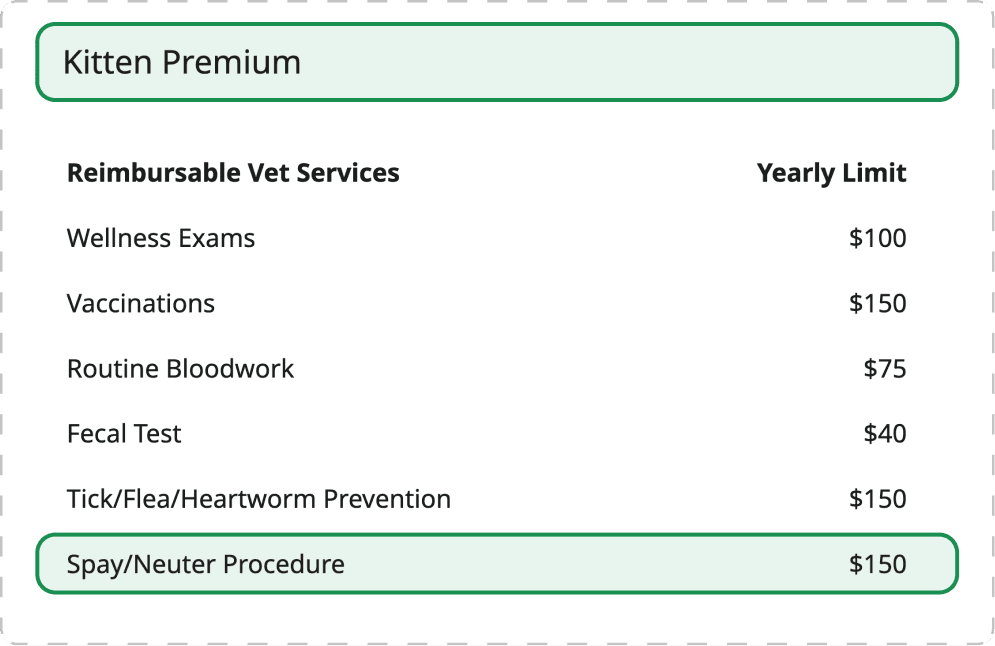
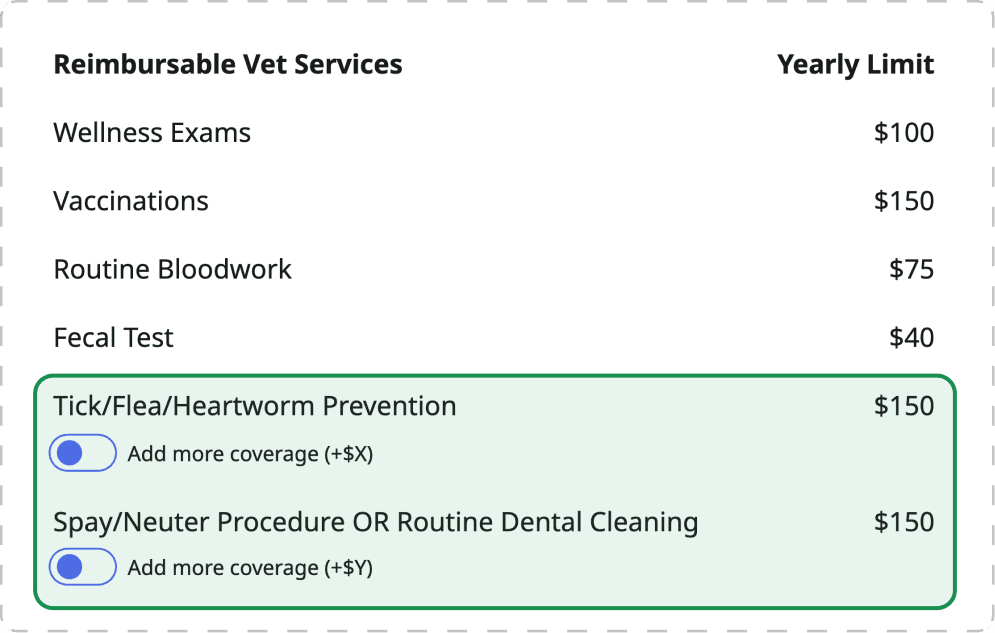
Direction 1 (customization levers) was had the highest user value based on what I learned during research. However, conversations with my engineering and finance partners surfaced two blockers: our plan structure couldn't support add-ons, and letting users self-select into coverage they'd use would drive up costs.
Direction 2 (new services/increased caps) delivered much of the same value through expanded caps and new services, without the technical lift or adverse-selection risk.
I proposed and led the design of a product variant selector test.
To avoid launching the wrong plan, I ran a product variant selector test to identify which benefit mix customers would actually pay for.
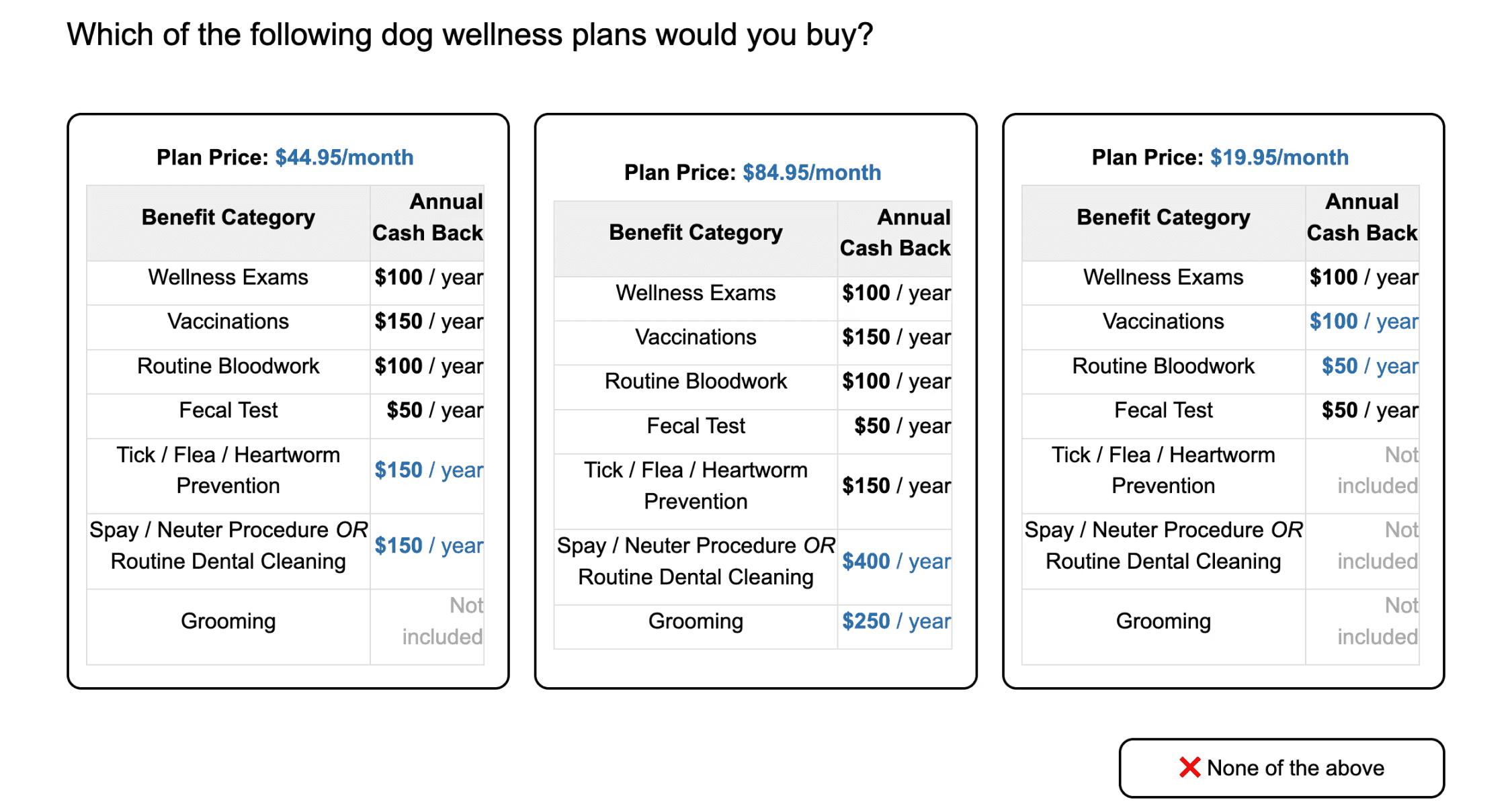
Sample question from the product variant selector test
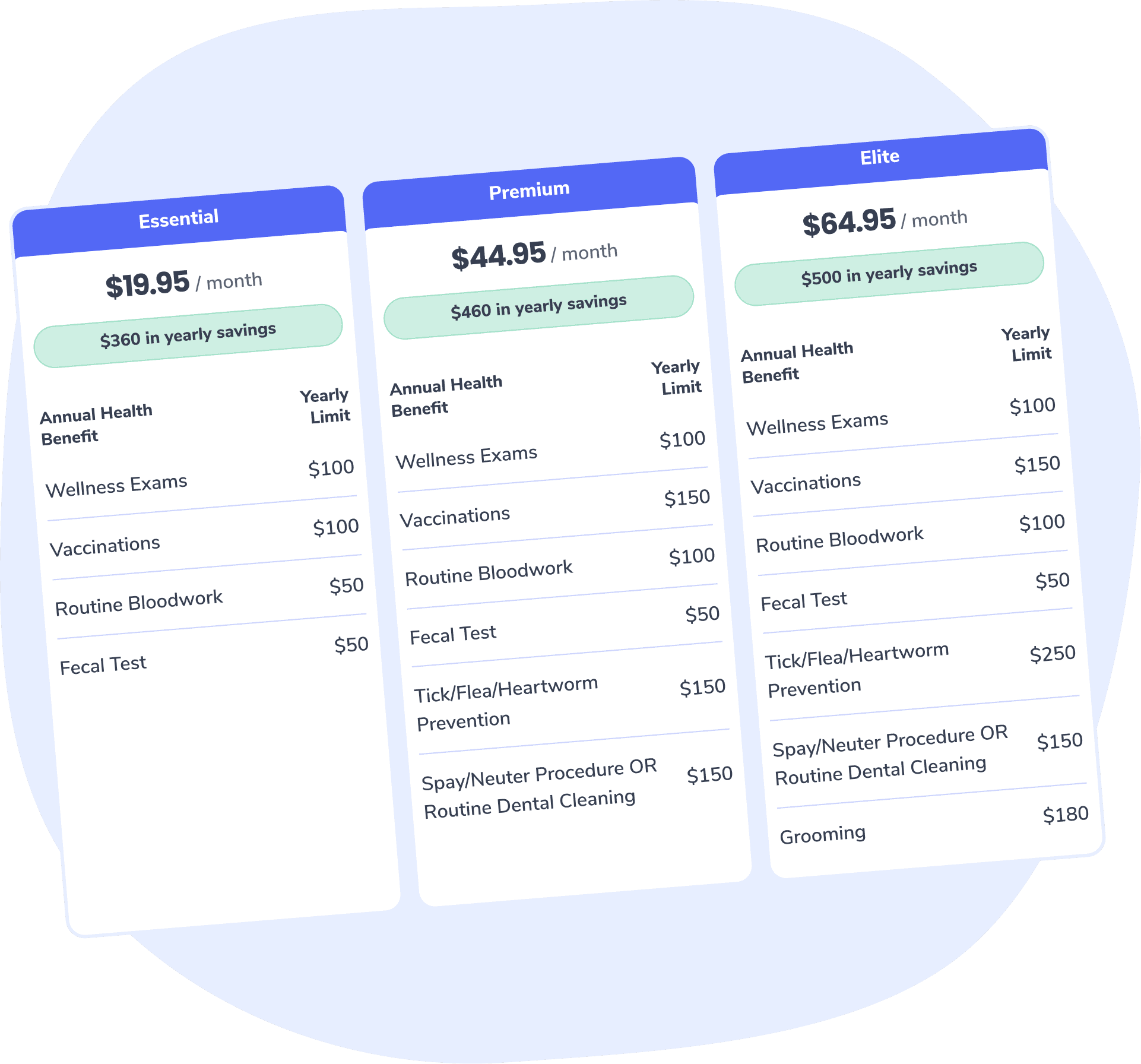
Using results to inform the third tier plan design
Preference share
Projected revenue (per 1,000 shoppers)
Product variant selector takeaways


Incremental increases mattered more than “complete coverage”
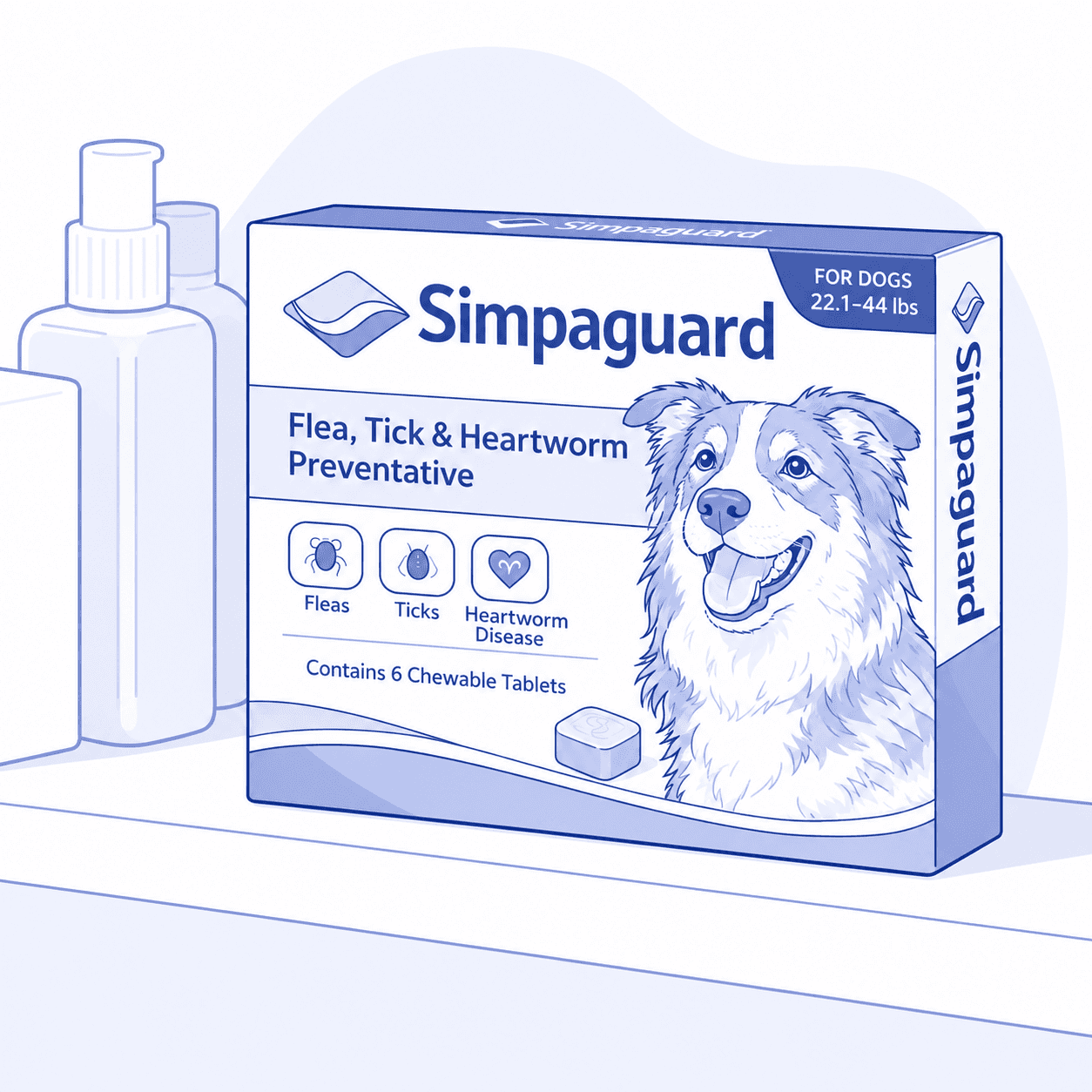
Dollars towards preventative meds drove more value than higher spay/neuter or dental caps
Including grooming consistently increased plan interest
Designing the purchase journey
With the plan structure set, the next challenge was the experience of comparing and purchasing plans.
Rather than design Elite's purchase flow in isolation, I treated this as an opportunity to build one, flexible selection system serving two surfaces: our DTC site and our white-label vet product.
Design principle: enable comparison, clarify selection
Unlike products with a single defining difference (an iPhone with different storage tiers), our plans vary across many dimensions, with no one feature signals the "right" choice. That makes comparison an essential step in shopping. The UI had to support side-by-side evaluation while keeping the current selection obvious.
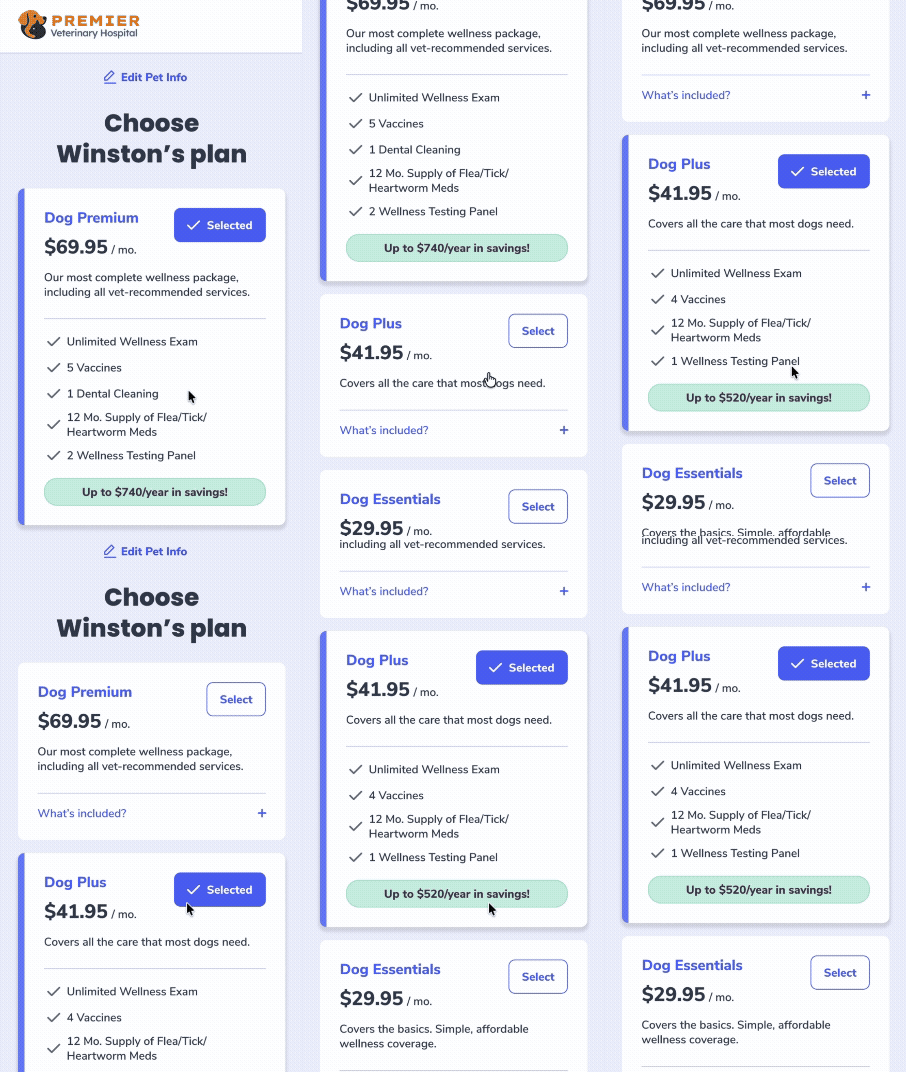
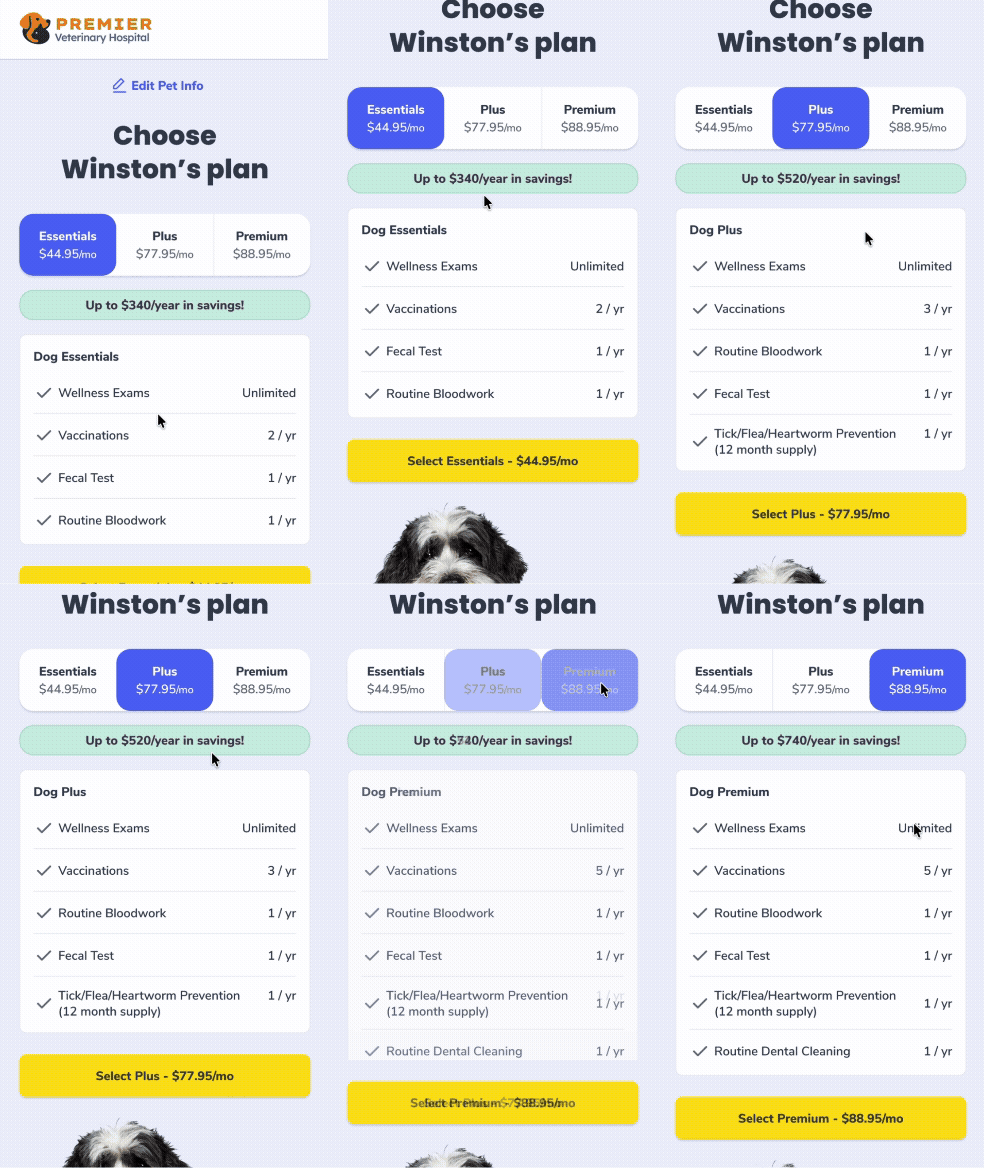
Tabs vs. expandable cards
Through user testing, I sought to understand which pattern better supports cross-plan comparison, especially on smaller viewports (e.g., mobile & tablet).
The tabbed version won: it kept content in place, making cross-comparison easier on mobile. Expandable cards required too much scrolling to compare.
Elite increased overall wellness conversion rate by 18%.
The introduction of Elite resulted in a significant conversion rate lift across all plan tiers.
Notably, this lift was not driven solely by customers selecting Elite. Conversion increased across Essentials and Premium as well, validating our hypothesis that introducing a third tier would act as a value anchor, helping customers better understand plan tradeoffs and commit with greater confidence at every price point.