New pet owners didn’t know if a wellness plan was worth it. Why?
I was investigating CVR gaps across the funnel when a pattern emerged from user interviews: prospective customers — especially first-time pet owners — couldn't evaluate whether a wellness plan was worth it because they had no baseline for what vet care actually costs.
“I had no idea how much certain things would cost because this is my first dog.” - Ellie R., DTC lead
“I wasn’t sure I’d use all the items enough to make it worth it.” - Stephanie S., DTC lead

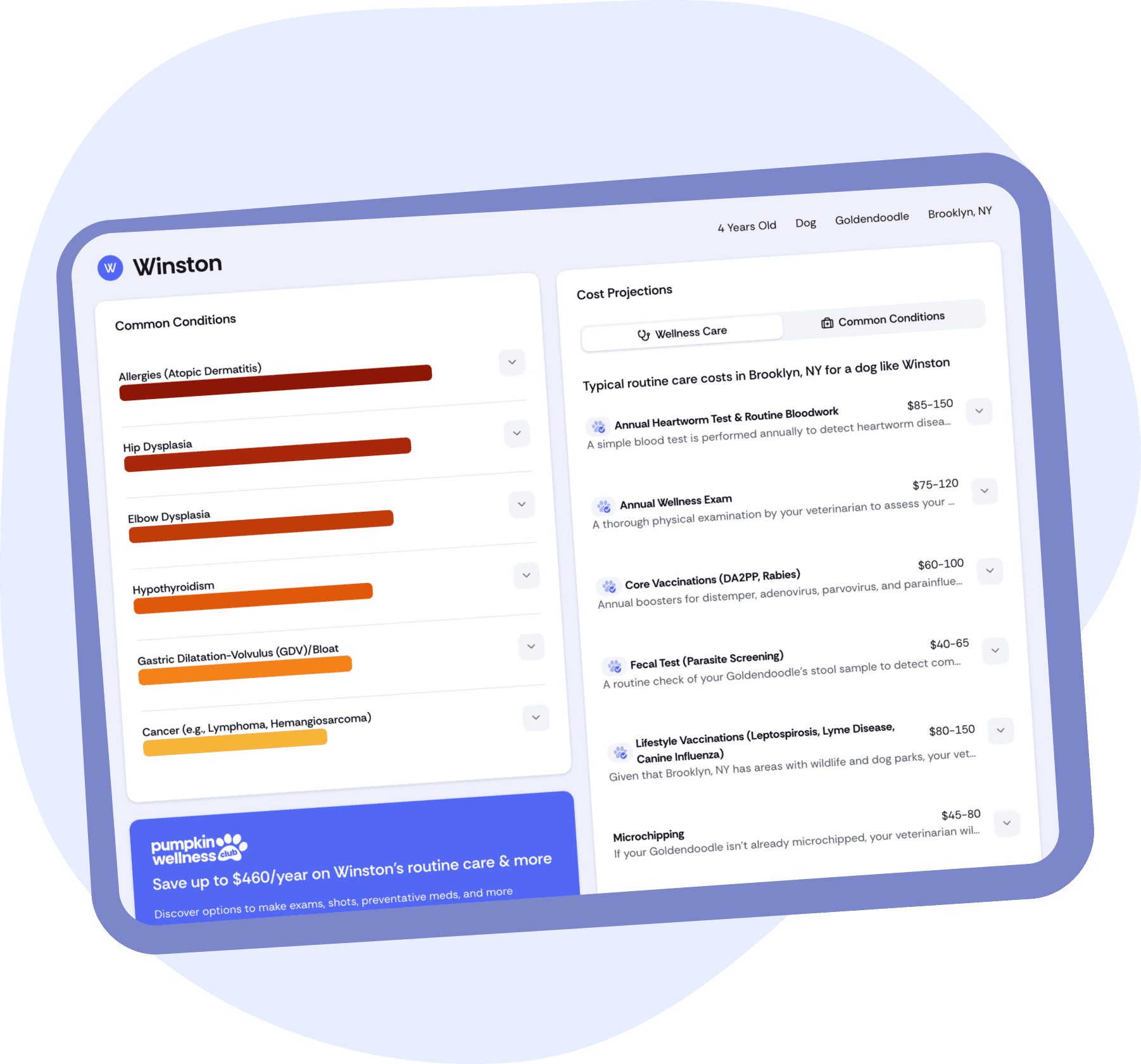
I designed and built a report that estimates your pet’s annual vet bills.
This wasn't a roadmap item. I'd been digging into our CVR gaps, kept hearing the same cost-uncertainty in interviews, and built a prototype to test the bet before anyone asked for one.
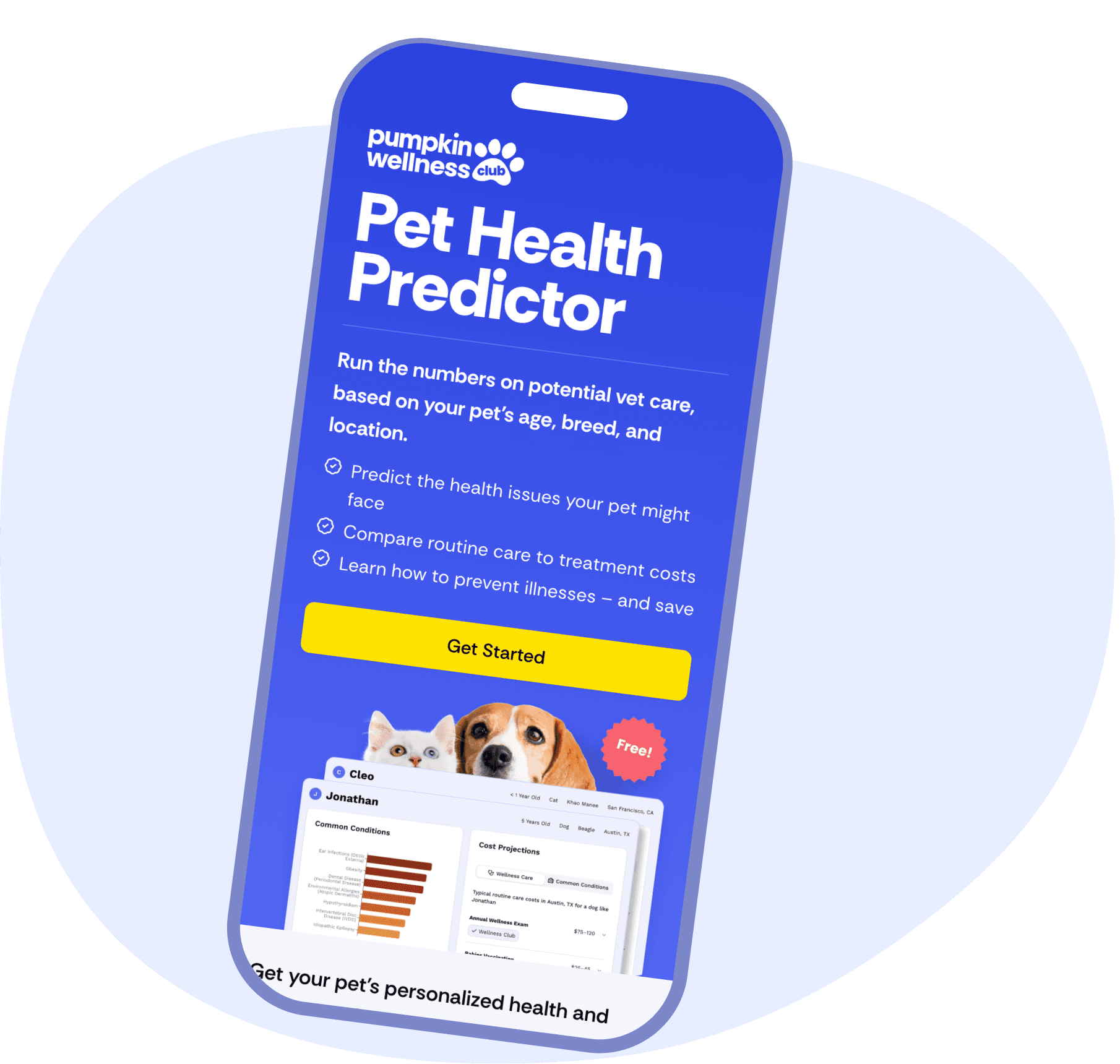
Pet Health Predictor is a cost-of-care report that gives prospective members a personalized estimate of annual vet costs based on their pet's profile and their local cost of living.
The goal was to serve as a gut-check for pet parents considering Pumpkin Wellness Club: here's roughly what you might spend, here's what a wellness plan covers, and now you can make an informed decision.
I built it myself with Next.js, the Gemini API, and a little help from Claude Code.
Building it myself meant owning calls a designer usually doesn't touch: which model to trust, and how responsibly to use it. Initially, I created this as a proof of concept, but after reviewing it with my engineering partners, my final product ended up being robust enough to launch into prod.
Gemini was the most reliable & performant model for the task.
I tested several models, and Gemini 3.0 Flash won on for best balancing what mattered here: clean structured output, the most accurate price ranges, and cheap to generate.
Acknowledging the limitations of using an LLM & using AI responsibly
While it's gotten less likely, LLMs are prone to hallucinating, and to release an MVP so we could learn quickly, we deliberately didn't use anything like RAG to root the estimates in actual cost of care data.
When designing the prompts used to generate the report, I instructed the model to provide an estimated range, and tested reliability against actually industry cost data. (Ultimately, with some refinements to the prompt, I was able to achieve approximately ~90% accuracy in the outputted cost ranges.)
Defining a schema & orchestrating the report generation
This was the most unique part of this project, and somewhere that straddling both design and code allowed me to solve very effectively.
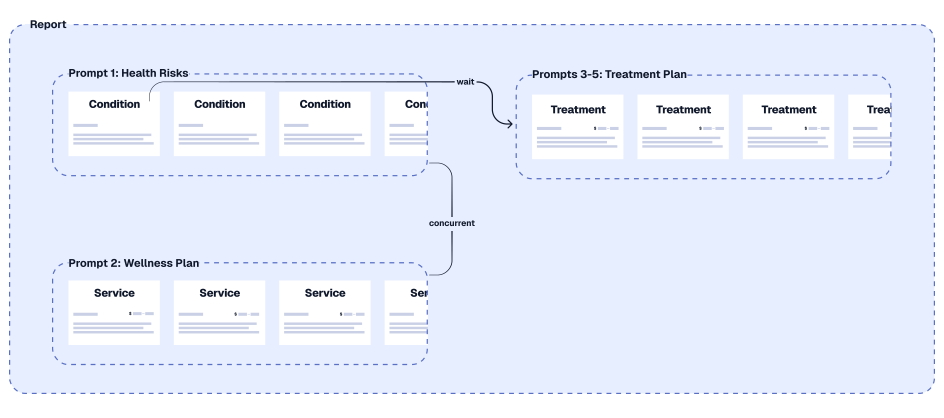
When testing, I noticed that sending Gemini a giant prompt produced vague, inconsistent reports. So I broke generation into 5 individual, focused prompts and designed how they'd run: health risks and the wellness plan generate concurrently to keep the report fast, while the treatment plan (which relies on knowing each of the top 3 health risks) waits for the health risks object to be generated before finishing.
It moved 125% more users to view our plans than other acquisition channels.
Shipped to real users. The Pet Health Predictor generated a 125% higher visit-to-quote rate than typical entry points (including search, ads, and organic traffic).